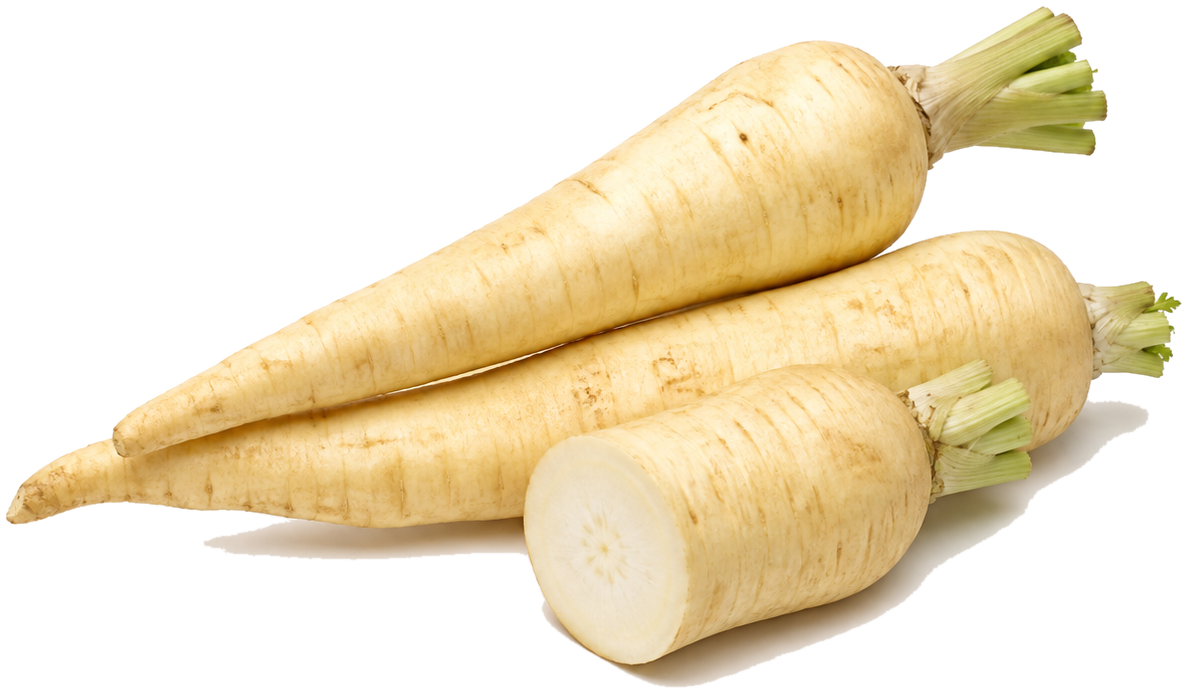
Parsnips can

Fruit & vegetables

Parsnips

Parsnips nutrition per 100 g, based on the raw edible portion. Values vary naturally by variety and freshness.

Nutrition per100 g
75kcal
314 kJ

DETAILED OVERVIEW

Nutrition facts

Macros

Protein1.2 g
2% RI*
Carbohydrates18.0 g
7% RI*
Fat0.3 g
0% RI*
Saturated fat0.1 g
0% RI*
Fibre4.9 g
20% RI*
Sugars4.8 g
5% RI*

Vitamins

Vitamin C17.0 mg
21% RI*
Vitamin E1.5 mg
12% RI*
Vitamin K22.5 µg
30% RI*
Vitamin B60.1 mg
6% RI*
Folate67.0 µg
34% RI*

Minerals

Calcium36.0 mg
5% RI*
Iron0.6 mg
4% RI*
Magnesium29.0 mg
8% RI*
Phosphorus71.0 mg
10% RI*
Potassium375.0 mg
19% RI*
Sodium10.0 mg
0% RI*

* Reference intake for an average adult. Values may vary by variety, producer and preparation.

GOOD TO KNOW

The whole story
behind parsnips

Nutrition is rarely simply “good” or “bad”. Here is the balanced picture to help you decide what fits your diet.

+

THE UPSIDE

Why it can be a great choice

  • Provides 4.9 g of fibre per 100 g, which supports normal digestion and helps meals feel filling.
  • Contains 17.0 mg vitamin C per 100 g, supporting collagen formation and normal immune function.
  • Contributes folate (67 µg per 100 g), needed for normal cell division and blood formation.
!

THE DOWNSIDE

What to keep in mind

  • It is starchier than most vegetables, so large portions contribute more carbohydrate and energy.
  • Raw portions may cause digestive discomfort in sensitive people; cooking often improves tolerance.
  • Nutrient values vary by variety, freshness and cooking method.